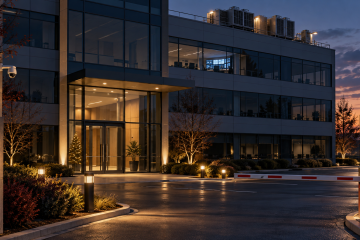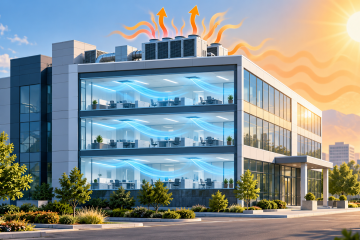
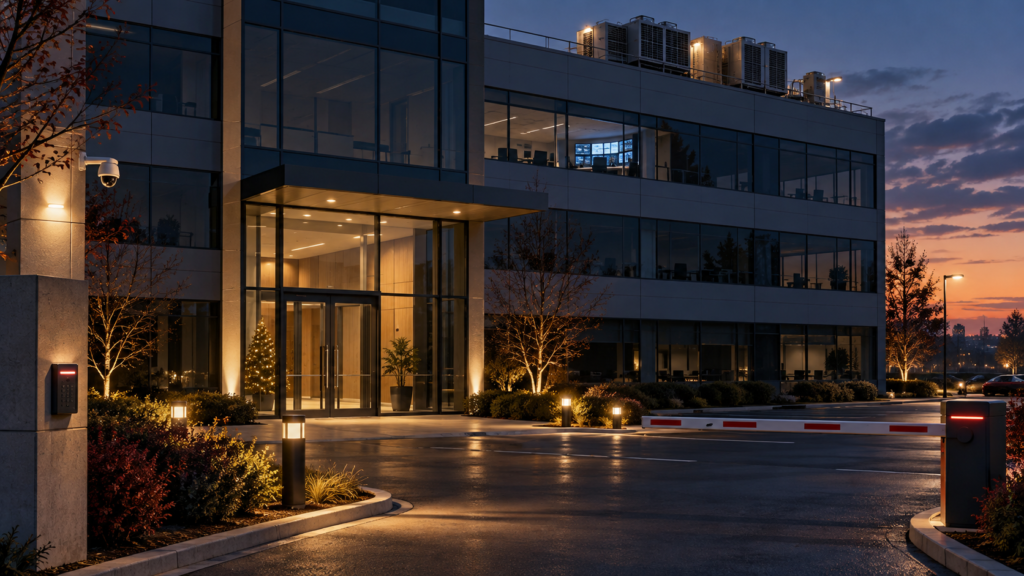
As the holiday season approaches, many offices will close or operate with fewer employees. Although the building may be mostly empty, its critical systems cannot simply be turned off.
A well-planned holiday schedule can reduce energy use while continuing to protect the building, its equipment, and the people who may need to enter it.
A Closed Building Is Still Operating
Even when employees are away, many building systems must continue operating or remain available. These may include:
- Heating, ventilation, and air conditioning
- Plumbing
- Fire and life-safety systems
- Security and surveillance systems
- Access-control systems
- Automatic doors and parking gates
- Refrigeration
- Technology and server-room equipment
- Sump pumps and other critical equipment
The goal is not to shut down the building completely. The goal is to adjust its normal operations safely and efficiently.
Review HVAC Schedules
HVAC systems are often programmed with occupied and unoccupied schedules. During a holiday closure, the building may not need to maintain the same temperature used during normal working hours.
However, outdoor conditions must be considered before changing the schedule. During extreme heat or cold, it may be safer to maintain the existing schedule or make only a small adjustment.
Some buildings must also maintain specific temperature or humidity levels to protect equipment, records, animals, medical materials, evidence, or other sensitive contents.
The Building Automation System, or BAS, may allow facility teams to enter annual holidays in advance. These schedules should be reviewed every year to confirm that the dates, times, and building needs are still correct.
Reduce Unnecessary Lighting
Lighting is one of the easiest areas to manage during a closure. Lights that are not needed should be turned off or placed on a holiday schedule.
Buildings with occupancy sensors may already control much of their lighting automatically. Other areas may require schedules or manual checks. Exterior, emergency, security, and life-safety lighting should remain available as required.
Secure Entrances and Parking Areas
Security teams and monitoring companies should know when the building will be closed and when normal operations will resume.
Facility teams should also confirm that:
- Automatic doors are scheduled correctly.
- Exterior doors remain secured.
- Access cards are adjusted when necessary.
- Parking gates operate on the correct schedule.
- Deliveries and contractor access are coordinated.
- Alarm contacts and emergency call lists are current.
Parking decks and garages deserve special attention during extended closures. Gates, lighting, cameras, and patrol arrangements should be reviewed to help prevent unauthorized access.
Know What Should Not Be Turned Off
Depending on the facility, certain systems must remain in operation. These may include:
- Freeze-protection systems
- Humidity-control equipment
- Fire and life-safety systems
- Server-room cooling
- Medical, animal-care, laboratory, or evidence-storage systems
- Refrigeration
- Sump pumps
- Critical plumbing equipment
- Security and surveillance systems
Turning off the wrong system can lead to equipment damage, water problems, unsafe conditions, or an expensive emergency.
Coordinate Exceptions Before the Holiday
A building may be officially closed, but that does not always mean it will be empty. Employees may be working, contractors may be completing projects, or special events and emergency operations may still occur.
Departments should provide accurate information to the facility team before schedules are changed.
A simple pre-holiday checklist should ask:
- Is anyone scheduled to work?
- Are contractors, vendors, or deliveries expected?
- Are any special events planned?
- Are special temperature or humidity conditions required?
- Do access cards, automatic doors, or parking gates need temporary changes?
- Who should receive alarms or emergency calls?
- When should normal building operations resume?
Confirm and Verify
Holiday schedules should be reviewed and tested before the building closes. Temporary changes and overrides should be documented so the facility team knows what was changed and when normal operations should return.
During the closure, critical alarms and building conditions should still be monitored. After the holiday, facility teams should confirm that HVAC, lighting, access control, automatic doors, parking gates, and other systems have returned to their normal schedules.
A successful holiday closure does not happen by simply turning systems off. It requires planning, communication, and verification. When departments and facility teams coordinate in advance, the building can remain secure, protected, and energy-conscious—even when the office is closed.