Lately, we have been experiencing some extreme temperatures, and sometimes it feels like “beating the heat” is impossible—even when you are inside.
When a building feels warmer than expected, you may wonder whether the HVAC system is working properly. Before adjusting the thermostat again, it helps to understand what the system is actually designed to do.
Your HVAC System Removes Heat
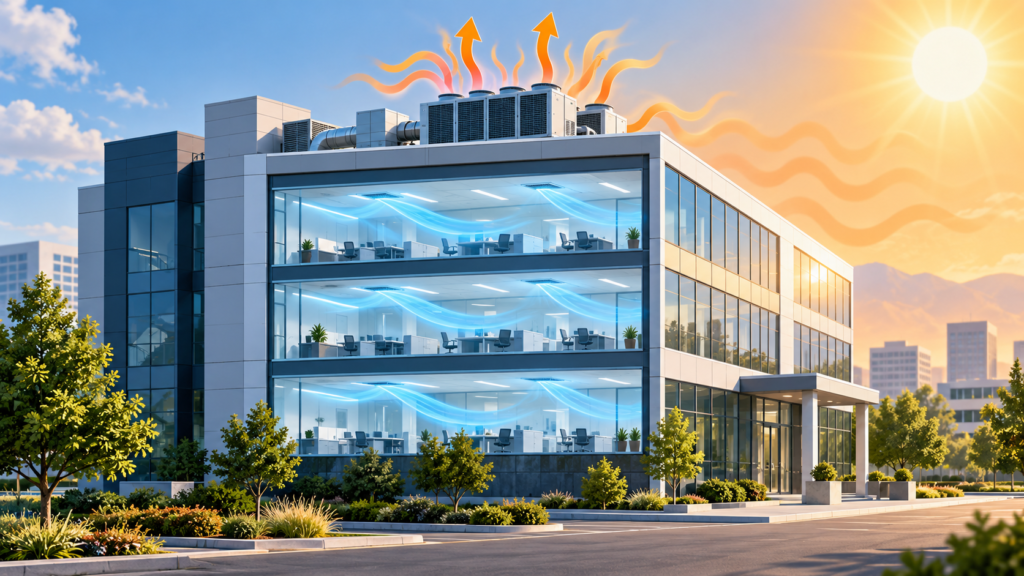
An HVAC system does not simply make cold air. It removes heat and moisture from the air inside the building and transfers that heat outside.
During extremely hot weather, buildings absorb more heat through:
- Exterior walls, roofs, and windows
- Direct sunlight
- Frequently opened exterior doors
- Buildings without entrance vestibules
- People, lighting, and office equipment
- Air leaks and outside-air ventilation
The HVAC system must continuously remove this accumulated heat while also managing indoor humidity.
Understanding Building Setpoints
Commercial HVAC systems are designed based on several factors, including outdoor temperatures, indoor conditions, occupancy, and the amount of heat produced inside the building.
That may sound technical, but building occupants should know the seasonal temperature setpoints established for their workplace. A setpoint is the temperature the HVAC system is programmed to maintain.
During extreme weather, especially when outdoor temperatures reach or exceed the system’s design conditions, some buildings may have difficulty maintaining the normal setpoint. Knowing the building’s setpoint can help occupants understand what indoor temperature to expect and dress comfortably for the conditioned space.
However, an unusually warm building should not automatically be blamed on the weather. If the temperature continues to rise or certain areas feel much warmer than others, the system should be evaluated.
How Building Occupants Can Help
Occupants can help the HVAC system operate more effectively by taking a few simple steps:
- Keep exterior doors and windows closed.
- Close blinds where direct sunlight is strongest.
- Avoid making drastic thermostat adjustments.
- Report comfort problems early.
- Turn off unnecessary lights and heat-producing equipment.
Lowering the thermostat significantly will not make the system cool the space faster. It may also make it more difficult to identify the actual cause of a comfort problem.
What Property Managers Can Do
Property managers and facility teams should:
- Replace filters as scheduled.
- Keep coils and other equipment clean.
- Confirm that dampers, sensors, controls, and schedules are working properly.
- Address mechanical problems promptly.
- Avoid turning systems completely off overnight during extreme heat.
- Start systems early enough to reach the building setpoint before occupants arrive.
- Monitor the Building Automation System, or BAS, for sudden changes and unusual conditions.
Preventive maintenance and proper scheduling can make a significant difference in how well a building responds to extreme temperatures.
When Heat May Signal a Larger Problem
Warm conditions do not always mean that the HVAC system has failed. However, certain warning signs should be investigated:
- Excessive indoor humidity
- Little or no airflow
- Weak airflow from vents
- Unusual equipment noises
- Water around HVAC equipment
- Sudden temperature changes
- Major temperature differences between offices, suites, and common areas
These conditions may indicate a maintenance, controls, airflow, or equipment-performance issue. Identifying the root cause early can help prevent a minor issue from becoming a major disruption.
Extreme heat places additional demands on every building. Understanding how the HVAC system works—and how occupants and facility teams can support it—can help keep the workplace comfortable, efficient, and prepared.